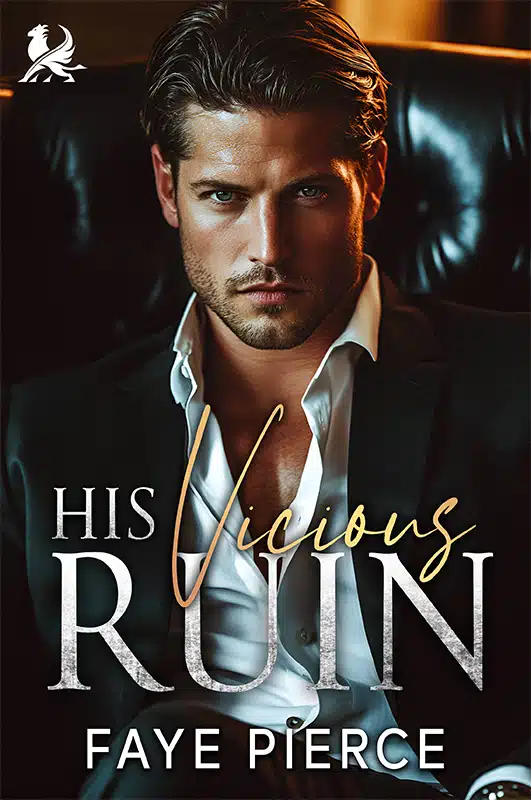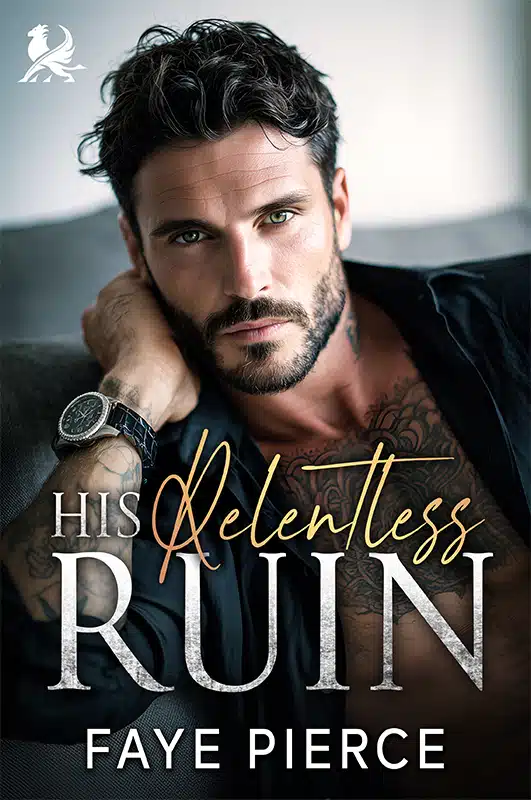
Don’t miss your link for the whole book at the end of the preview.
Chapter One
Jade
“I’m not going,” I don’t even bother lifting my eyes from the series playing on the flat screen TV in my room.
My cousin Julia has been trying to convince me to join the party my Papà decided to throw at our estate, for the last thirty minutes. Even though I’ve made it clear that I find eating sand more appealing than hanging around all the people that came to witness the freak show that’s about to go down. Julia just won’t leave me alone and the temptation to just push her out the window is getting more real by the minute.
“It’ll be fun!” She sits across from me on the coffee table, blocking the TV screen. “Besides, Nolan is hot!”
“Then you marry him,” I get up and walk past her watching her face light up as I approach the door. “Get out.”
“But—”
I open the door for her, but my cousin doesn’t move. Instead, she remains put, not even trying to pretend how much she dislikes me. Or how much she wishes to be the one whom Papà wants to marry off to Nolan Devlin.
“What’s with this circus?” Mamma walks in carrying the same frown I saw on Julia just minutes earlier. “Why aren’t you dressed yet?”
“I am dressed,” I respond dryly.
“A pair of skinny jeans and a top that is a size too small small is not appropriate for this type of party,” Mamma closes the door behind her with a loud click and walks up to my walk-in closet.
“You’re both wasting your time,” I make myself comfortable in the sofa again. “I said I’m not going and I’m not going to change my mind.”
“Yes, you are,” Mamma responds from inside the closet. “And if you don’t get downstairs yourself, your Papà will come here himself. We both know that’s not something you want to happen.”
I sigh. She’s right, even though I hate admitting it and would never do so out loud. Mamma doesn’t need a verbal confirmation that she’s right, she’s already too full of herself as it is.
“Told ya…” Julia mouths and I roll my eyes.
“This is perfect!” Mamma walks out of the closet carrying a puffy white dress a porcelain doll would wear. “Put this on with the silver shoes and come greet your guests.”
Your guest.
The reason why this whole freak show exists in the first place. Even though Papà didn’t explicitly tell me what he’s planning, I’m aware that he’s throwing this party so I can spend time with Nolan Devlin. Or my future fiancé. And I’m not the only one who knows it, I’m willing to bet, even the service staff is aware of the potential engagement between me and Nolan.
“Hurry!” Mamma helps me get up from the sofa, rushing me. “It’s rude to make people wait when you’re the host.”
I sigh, starting to undress myself. “I’m not the host, Papà is.”
“Maybe be more careful with the things you say around Nolan,” Mamma continues. “Men don’t like when a woman is too stubborn and speaks a lot.”
“Oh,” I raise an eyebrow. “You’re both those things and you’re married.”
I see Julia chuckle behind her, but Mamma doesn’t seem very amused with my comeback. Instead, she turns around on her heel, her short hair bouncing as she walks to the door and slams it shut behind her.
Someone else would consider this a win, but I know better. It’s always been like this with my parents and I’ve gotten used to it. But if they think I’m going to willingly walk from one prison into another, they clearly don’t know me enough.
“Your Mamma said to put on the white dress,” Julia’s eyes widen as I walk back into the room wearing a red dress that highlights every curve on my body and might be a little too short for a family party.
“Do you like that white dress?”
Julia nods.
“It’s yours,” I give her a small smile as I lift my long black hair into a high ponytail.
“Are you kidding me?” Her eyes go wide, but there’s an undeniable sparkle behind them. “It’s designer!”
“Everything in this house is,” I proceed to apply my makeup and finish it with perfume on my wrists and behind my ears.
“Thank you, Jade!” She squeals, grabbing the dress from the bed. “It’s gorgeous! I’m going to put it on right away. Thank you!”
“You’re welcome,” I smile, knowing Mamma will be pissed when she sees Julia wearing the dress she picked for me.
The thing about Mamma’s taste is that she likes pretending I’m a literal princess and ever since I can remember, she’s dressed me up in that type of hideous outfits. But that’s not me. It never was.
I might be known as the Moretti Princess, but I’m far from being one.
By the time Julia and I join the crowd downstairs, everyone is a little buzzed and laughing too loudly. The party is outside by the pool with a DJ and an open bar. My Papà is not even bothering to hide how hard he tried to make this an appealing setting for younger people.
I spot Mamma at the far end of the pool, with a drink in one hand. She’s talking to some of our cousins, smiling from ear to ear. Anyone who saw her would assume she adored her cousins, but she’s been talking crap about them the whole day. Her eyes meet mine briefly and I smile. Then she looks over at Julia, her face turning red as she says something to the cousins before walking over to where we’re standing.
“I need to join Papà,” I tell Julia, leaving her to face my mother alone.
“Sure,” Julia responds cheerfully, unaware that she’s about to get the lecture of her life from Mamma.
I know my mother won’t bother me while I’m with Papà and Nolan, so I rush towards their table. As I approach them, I hear Nolan complain about something to the waiter and the young waiter apologizing as if he’s run over Nolan’s whole family with a car.
“Principessa,” Papà’s face lights up as I join them. The party is actually pretty cool, except there are still too many old guests, so the party planner suggested we have a less noisy seated area far from the DJ.
“Papà,” I nod politely, then I turn to Nolan, who’s now on his feet with an extended hand. “Nolan.”
I don’t take his hand. Instead, I walk past him and make myself comfortable on the free chair. Papà side-eyes me, but I put on my most polite face and decide to ignore him.
“You look nice tonight,” Nolan smiles, checking me out from head to toe, his eyes staring a little longer than necessary on my bare legs. I instantly feel like I want to cover myself.
“You’re late,” Papà tries to joke. “The guests were already starting to wonder if you’d come to your own party.”
“I was delayed, my apologies,” I respond, my voice cold and put together.
“Right,” Papà nods but I know he’s only being polite because of Nolan’s, and that he’s more than aware I wasn’t really busy. “Well, Nolan here was just telling me about the Devlin club expansion.”
“Fascinating.” I’m not surprised in the slightest that Nolan took advantage of his time alone with my Papà to convince him that the Devlin family would be an amazing ally. I might not know the guy that well, but he has a self-centered prick written all over him.
“That’s right,” Nolan jumps in quickly. “We’re working on opening two more clubs in New Orleans, and then expanding to different cities. The business is going incredibly well, it would be a shame not to.”
Before I can say anything else, we’re interrupted by the waiter carrying Nolan’s drink. Nolan turns in his seat, almost knocking over the tray from the waiter’s hand, making the poor guy almost jump out of his skin.
“It took you long enough!” Nolan snaps, grabbing his drink. He takes a sip, making a disgusted face before adding. “It’s too warm, bring another.”
“Thank you.” The three men turn to me when I speak. I get up and walk over to the waiter, helping him clean the spill on the tray caused by Nolan. “You’re doing great tonight.”
“Why don’t you two move to the dance floor?” Papà cuts in, and when I turn around I see Nolan’s face has turned red. He is fuming. It takes all of the willpower I have in me to not burst into laughter.
“I’m not in the mood for dancing,” I respond, but Nolan is already on his feet, his hand on my waist as he’s pulling me towards the dance floor.
“Come on,” Once we’re far enough from my Papà, he stops turning to face me. “You’ll have fun with me.”
“Pass,” I grab one of the drinks from the tray as another waiter passes us by. I thank the waiter and take a sip before even realizing what it is and regret it immediately once the strong vodka burns my throat.
“Your Dad wants us to spend time together,” Nolan continues. “Don’t you want to make him happy? And me?”
“We are spending time together right now,” I take another sip of my drink.
“So you don’t want to dance,” His jaw tightens and I’m almost entertained at how clueless he is. “Fine.”
With that, Nolan turns around and calls out the waiter closest to us. My heart drops when I realize it’s the same poor guy he was yelling at just a few minutes earlier.
“Whiskey on the rocks,” he instructs the waiter as his hand finds my lower back, discretely pulling my body closer to him. We’re surrounded by other guests chatting and having fun, some of them probably gossiping about us, but I feel lonelier than ever. A part of me wants to scream and ask for help, and another part of me wants to just run through that gate and never look back.
But where could I even go. There is no place on earth where Papà wouldn’t be able to find me, and now I’d have to hide from the Devlin’s as well.
I try to squirm away from him, but his grip on me tightens, so I take another sip.
“Your drink, sir.” The waiter returns just in time, making me wonder what would happen if I signaled him I’m in danger.
You know what would happen.
I sigh. I don’t want to drag any innocent people into my drama. But I also don’t have any idea how am I going to get away from all of this.
“At least it’s cold this time,” Nolan grabs the drink, his grip around me loosening as he takes a sip.
I smile politely at the waiter, hoping it’ll make him feel at least a little better considering how awfully he’s been treated. Though I doubt he’ll feel better until he finishes tonight’s party and gets far, far away from the Moretti estate.
I can’t help but feel a little jealous.
“I can make him disappear in five minutes,” Nolan whispers into my ear, sending a shiver down my spine. Then he pulls away just a little to look at my face, but his hand never leaves my back. “But I won’t. Us Devlins don’t use our power like that.”
“Right,” I push his hand away, pretending to be interested in the snack bar a few feet from us. Nolan follows me, still talking about how great the Devlins are and what he can do for my father. I tune him off somewhere around the port talk.
“Watch yourself,” Nolan says, his tone smooth but sharp with irritation.
I turn to find one of the waitresses on the ground, an empty silver tray clattering beside her. She’s pale and trembling as she manages to say a weak: “I’m sorry.”
“What happened?” I ask quietly, reaching out to help her up.
Nolan doesn’t look at the girl, casually brushing a speck of dusk off his sleeve. “Careless,” he says, his voice dripping with condescension. “A mistake like that in front of the guests reflects poorly on your father’s house, Jade.”
“She tripped, Nolan,” I give the waitress a calm, reassuring nod as she gets to her feet. “The estate will survive.”
I don’t apologize for her, nor do I waste energy arguing with a man who mistakes cruelty for refinement. The waitress nods with a small smile on her face, and quickly hurries inside.
“Jade,” A familiar, cold voice cuts through the noise. “Inside, now.”
I know it’s pointless to argue with Papà when his temper flares, so I follow him into the kitchen. The loud music and the chatter outside fade behind the heavy glass doors, leaving us in the tense, isolated quiet of the dark kitchen.
“You need to stop that,” Papà says, turning to face me.
“Stop what?” I keep my tone level, trying to avoid provoking him. “I handled a scene before it escalated.”
“You did everything in your power to undermine Nolan in front of the guests,” he points a sharp finger at me as he speaks.
“Nolan undermines himself by acting so arrogantly,” I reply calmly, looking him dead in the eye. “He lacks the composure required to lead, Papà.”
“Enough!” Papà’s voice snaps, but I don’t flinch or look away.
“I’m not going to marry him, Papà.”
“We need him, Jade,” Papà says, forcing his voice into a lower, heavier register. “We need a strong alliance right now.”
“No,” I shake my head. “He’s the one who needs us and he’s going to use our firepower and territory in his war with the Kavanaghs.”
“He knows the Morettis don’t want to get involved in his war.”
“Well, whether we want to or not, if you force me to marry him, he won’t care. We will become involved whether you want it or not.”
Papà stays silent, taking my words in as his sharp eyes study my face. I continue. “He’s using our leverage to survive his own blood feud. And offering me up as the collateral.”
“I won’t force you to marry him,” Papà says, knowing the risk of pushing me. But I know better than to start jumping up and down and celebrate. I know there must be a trap hidden in his generosity.
“But?”
“If you refuse to marry Nolan, you need to bring me an alternative alliance that carries equal weight.”
“And if I don’t?” I ask even though I already know the answer.
“If you don’t, the decision is taken out of your hands.”
With that, Papà turns around, leaving me alone to process his words. I follow him outside but make a turn, heading to the bar instead of returning to Nolan or looking for my cousin.
My family has a way of making me feel like I’m gasping for air in a room full of oxygen. A lot like being underwater without knowing how to swim.
“A mojito, please.”
“Is hiding at the bar how you make your guests feel welcome?” A voice comes up from behind me but I don’t turn to look at him. It’s probably one of the pretentious pricks that follow Nolan everywhere and lick his ass.
“You can leave if you don’t like it.”
“Can I?” The guy comes up to my side and climbs onto the free stool next to mine. “I’ll make sure to mention to your father that you’re still lacking a few hospitality classes.”
“You know,” I sigh, picking up the mojito that the bartender left in front of me. “I’ve been told that I have anger issues, too. So maybe you don’t want to sit so close to me.”
That’s entirely false, but I’m so over tonight that I don’t care anymore.
“Is that so?” His voice comes out amused and I make the mistake to turn around and look him in the eyes, which are pale green and sparkling with mischief.
Unlike Nolan, there is not a trace of insecurity, or any type of emotion for a matter of fact, behind those eyes. Yet they are nowhere near to being cold. The way he stares at me almost makes me curious.
Who’s this guy?
I don’t think I’ve ever seen him at the numerous parties my family has attended or hosted for the last couple of years. And he doesn’t look like an ass-kisser to be one of Nolan’s guys.
“Yes,” I respond, my grip on the glass tightening but my face remaining indifferent.
“I guess I should have come prepared then,” he smirks, playing with the drink in his hand. I can’t help but notice how polished he looks with his wavy light brown hair slicked back and an expensive suit.
Definitely not an ass-kisser.
“Worried you’d ruin your overpriced suit?” I raise an eyebrow, eyeing him from head to toe and regretting it almost immediately when my eyes meet his and I see the knowing look on his face.
“Ouch,” he places a hand over his chest in a dramatic, sarcastic motion. “That almost hurt. I’ll have to teach you a few things about insulting people.”
The way he says those words makes everything inside of me twist in a strange way I’ve never experienced before. Heat pools in my face and I force myself to look away, hoping he doesn’t catch my reaction.
“And another thing.” He pauses to take a sip of whiskey, making me wait until he finishes his thought. “You also need to learn how to be more careful when you’re having a private conversation with someone. I heard your father offering you a choice earlier…”
I almost drop the glass from my hand when I turn my whole body to face him, a little too quickly. “Didn’t your mother teach you not to eavesdrop on conversations that are none of your business?”
“The thing is,” he copies my movement from earlier, turning to face me so our knees touch in the tight space. A brief glance to my thighs is enough for the blush in my cheeks to return. “Your problem became of interest to me the moment your Papà announced that you need to find another man.”
“Geez, it’s so nice to hear that someone finds my problems entertaining!” I snap back, aware of the fabric of his pants gently grazing my exposed skin whenever one of us moves.
“If you shut up and hear me out,” His voice remains incredibly leveled and controlled, even while we argue, and a part of me doesn’t know how to act around someone like him. I’m used to being around men like Papà and my uncles, who shout a lot.
“What? You’ll magically turn into some knight in shining armor?” I laugh.
“I can.”
“How?” My heartbeat accelerates at the way he looks up at me from his glass and my knees are still burning from his touch.
Who’s this man?
“Marry me instead.”
Chapter Two
Jade
“You’re crazy.” Uncontrollable laughter escapes me. “I don’t even know you.”
“You don’t know Nolan either,” he says, offering a small, confident smile that forces me to break eye contact just to hold onto my train of thought.
“Not a good example,” I shake my head. “As I’m not going to marry Nolan.”
The mere thought of him makes my skin crawl. The way he corners me when no one is watching, the lingering, possessive touch of his hands on my waist or lower back… He’s constantly taking liberties he hasn’t earned and the boundary pushing is a dangerous warning of what life under his thumb would become. Aside from being incredibly distasteful.
“I repeat,” I look him directly in the eyes as I speak again. “You’re crazy. No one in their right mind proposes marriage a few minutes after meeting someone.”
“Look at it like this.” He leans his elbow on the counter, leaving the drink on its solid surface. “It’d be a mutual beneficial agreement, since I also need a bride. From the outside, it’d look like it’s a real marriage, our families and everyone would believe that we’re together…”
“That sounds a lot like how a real marriage works.”
“But in private,” he shakes his head. “We’d both know that it’s just a deal.”
“Meaning what exactly?” I raise my eyebrow, intrigued by his offer, but not wanting to get myself into bigger trouble than I already am. Though it’s tough to imagine anything worse than marrying Nolan at the moment.
I study him for a second, trying to figure out what the catch is, because there has to be one. Men don’t just walk up to a stranger at a party and offer her an escape route out of pure kindness. Especially not when they look this calm about it.
“And what exactly do you get out of this?”
His eyes flicker over my face, almost as if he was expecting me to ask him that. “A wife.”
“That’s not an answer.”
“It’s the one you’re getting for now.”
I narrow my eyes at him, not sure if I want to stare at him or hit him with a chair. There’s something deeply irritating about the way he says things. He never sounds rushed, or nervous, or even slightly worried that I might tell him to go to hell. It’s like he already knows where this conversation is going.
“You always talk to women like this?” I raise my eyebrow.
The corner of his mouth lifts as he speaks. “Only the ones who ask too many questions.”
Before I get to say anything else or ask another question, he proceeds to lay out his plan for our fake marriage, almost as if he thought this through long before he overheard my conversation with Papà. “We don’t share a room, we don’t pretend to be in love at home, and we don’t interfere in each other’s lives.”
“It sounds a little too good to be true,” I admit. “Why do you need a wife? And can’t you get a real one?”
I just can’t seem to be able to wrap my head around it. He might be one of the most good-looking guys I have ever seen, and he’s clearly bright. Maybe a little prone to risking his life, but the way he speaks shows he’s an educated, intelligent man. So why would a man like this need a fake wife?
“I can, but I prefer to focus on business,” he smirks. “Once you agree, you’ll have my full resources at your disposal, and that means financial security, complete protection, and everything you could possibly want. We can discuss all the details after you agree.”
I tilt my head, studying him, still unable to put my finger on what exactly it is about him that makes me react to his proximity. I’m supposed to get up from this chair and run after getting a marriage proposal from a guy I’ve never seen before, so why can’t I run away from him? What is it about him keeping me interested in hearing more about this proposal?
“So you want me to agree first and ask questions later?”
“I want you to understand that whatever this is, it doesn’t have to become complicated,” he responds, almost making me laugh. A marriage proposal from a stranger is already the definition of complicated.
“You know, normal people at least introduce themselves to one another before deciding to spend the rest of their lives together.”
“I don’t have time for normal,” he returns his focus to the glass but doesn’t take a sip. The action itself makes me stop smiling. Even though I’ve never had normal as an option in my life either, I’m not used to someone mentioning it out loud. It’s an unspoken rule, we don’t live a normal life but we never speak about normal either.
“I…” I sigh, for the first time allowing myself to show him vulnerability. “I need time to think about it.”
The questions keep piling up in my head, making it hard for me to think clearly. I’m aware of the risk I’m running if I fail to find another option for Papà and I’m confident that marrying Nolan would make my life a living hell. But how can I know that this stranger is safer than Nolan? I might have a strong dislike for the first, but right now this deal comes with the risk of trading one dangerous man for another.
“There’s a problem with that,” he leans in closer to make sure no one else hears us, even though there is not a single soul around us. Everyone is on the dancefloor or seating area. “You don’t have time to think about it because Nolan is already preparing to ask your father for your hand officially.”
Why does he look completely unbothered proposing to a stranger?
“How do you know that?”
“I overheard it,” he shrugs. “And I know that if you wait, your father will make the decision for you.”
“You have a terrible habit of eavesdropping,” I say, but as I turn around to look at Nolan, I see him standing next to my father talking to each other as if the agreement is already settled between them. As if he… owns me. Shivers run down my spine and I return my attention to the mysterious knight in shining armor. “Okay. Let’s get married.”
The words leave my mouth before I can second-guess them and for a second, I find myself just staring at him, almost waiting for the panic to kick in. Instead, there’s only a strange sense of relief. It makes no sense at all, I’m sitting beside a man whose name I don’t even know, agreeing to marry him because the alternative is worse.
If that’s not proof enough of how badly I don’t want to marry Nolan, I don’t know what is.
The stranger’s face lights up at my words and even in the low lights, I notice the way they reflect in them as a smile spreads across his face. “You made the right decision.”
We shake hands, making the deal official, and for some reason my heart decides to skip a beat the moment our skin touches. It’s strange how just a handshake or the brushing of the knees with a complete stranger can affect me like this when Nolan’s hand on my back earlier made me want to take a bath in acid.
This hand is warm, his grip firm without being too tight, and for one ridiculous second, I forget that we’re surrounded by people and just pretending to be in love. But then I remember this is a deal. A very strange, very dangerous deal, but still a deal.
I might have just made the dumbest decision of my life, or the best one, the jury is still out on that one, but the thought of not having to marry Nolan washes over me with relief.
I don’t even know what kind of family he comes from.
“Shall we dance?” The knight in shining armor elegantly steps down from the stool, offering me his hand.
I smile, taking his hand as I climb off the stool. If we’re going to do this, we need everyone to believe our marriage is real and that we’re into each other. This is the perfect way to ease everyone in.
God, he’s tall.
I have to tilt my head back to look at him, and he catches the movement with an amused expression that makes me wonder if he can read every thought on my face.
“What?” I ask.
“Nothing,” he shakes his head slowly.
“You’re smiling?”
“I’m aware,” his grin widens.
I roll my eyes and let him lead me toward the dance floor. As we do, I feel the heavy stares on us but I don’t turn my head to meet their eyes. His hands find my waist in a delicate, slow movement, and he pulls me close to him, almost as if he’s being deliberate about not crossing any lines.
I tense for a half a second, instinctively expecting the same possessive grip Nolan used earlier, but it never comes. His hands stay exactly where they are, steady and careful, giving me enough space to sway my body to the music. Which somehow makes it worse because now I’m aware of every inch between us.
And to my surprise, he’s a great dancer. Somehow, he manages to look like he belongs everywhere he goes and I’m starting to wonder if he’s going to disappear when the clock strikes midnight. I wouldn’t even put turning into a pumpkin past him.
The eyes of everyone at the party are burning a hole into the back of my head, and I could swear that it suddenly became quieter. Or maybe that’s the deafening beat of my heart making everything else go silent. I’ve never been this close to a man before, and I’ve never imagined my first slow dance to be with a complete stranger I just agreed to marry.
I don’t even know his name.
But oh well, it’s either him or Nolan and there is no way I’m getting married to Nolan. I’d rather eat sand for breakfast every day for the rest of my life.
“Relax,” he murmurs.
“I am relaxed,” I respond a little too quickly, realizing how that contradicts the actual words coming out of my mouth.
His eyebrow lifts. “You’re holding your breath.”
“You’re very observant,” I immediately let it out, annoyed that he noticed.
“It’s useful,” The corners of his lips turn upward just a little.
“For what?”
“Most things.” He looks down at me as he speaks and the way his eyes fall to my lips makes me suddenly become hyper aware that I should have applied lipstick.
I hate that he makes me think about this type of things and I hate how well he’s pretending right now.
“Your almost ex-fiancé is staring,” The knight in shining armor whispers in my ear, and it takes me a second longer than I’d like to admit for the words to get through to me and process them.
He even smells nice.
When I look in the direction of Papà and Nolan, I realize Nolan’s face is green with fury. I almost expect his clothes to rip and him to turn into Hulk, and my blood freezes when my eyes meet his.
“Do you two know each other?” I ask. Nolan is weird and annoying but his expression doesn’t appear to be someone who’s just upset to see the girl he wanted to marry dance with someone else.
“Yeah, kinda,” he replies.
“That’s incredibly vague,” I hold myself back from rolling my eyes, more than aware of all the eyes that are on us.
“It is.”
“What did you drag me into?” The unease spreads through me as the scene in front of my eyes begins to resemble one you’d catch in a random documentary about wild animals. “What’s happening here?”
He pulls away just enough to look me in the eyes as he speaks. “My name is Malachi Kavanagh…”
No way!
My smile disappears.
The Kavanaghs are one of the most powerful families in the city, but even more important, they and the Devlins are sworn enemies. Which means I accidentally got myself between two guys that already want to rip each other’s heads off, and I gave Nolan the perfect excuse to do it.
My stomach twists as everything about him starts making a little more sense. The confidence and the way he walked up to me like he already had all of this planned and knew exactly what he wanted.
“I refuse to take part in this game,” I try stepping away from Malachi without making a scene. “You’re not going to use me to provoke Nolan, or drag my family into your war.”
His eyes lift from mine and he looks in Nolan’s direction, his arm never leaving my waist. I feel panic washing over me at how serious all of this is. Papà is going to be furious.
“So that’s why you chose me,” I say.
“I chose you because you needed a way out,” his eyes are full of determination as he speaks.
“And you suddenly woke up one day and decided you wanted to save me?” I lower my voice while trying to maintain a neutral expression. “It’s just a coincidence that by marrying me you get to give Nolan a blow?”
“When you put it that way, it sounds worse than it is,” his voice remains steady as if we’re discussing popcorn flavors. “It’s a deal between two people who happen to have a common enemy.”
“What you did is called coercion,” I continue. “You should have given me all the facts before manipulating me into agreeing.”
“I see you know enough about law and how the world should work,” he smiles, unbothered. “But there’s no turning back now, we struck a deal.”
“How can there be no turning back when literally no one knows about our deal?” I ask, my eyes challenging him. “And all we have is a verbal agreement?”
“Because the moment you said yes, I became your choice.”
“That doesn’t make any sense,” I stare at him.
“It does to Nolan,” he answers.
When I look toward Nolan again, I realize he’s still watching us. And so is Papà, and probably half of the damn party. Malachi’s hand remains at my waist and I almost feel bothered by how completely comfortable he looks standing in the middle of a situation that is making me want to run out of my own house.
“You’re crazy,” I whisper.
Malachi smiles. “You already said that.”
“And I meant it both times.”
I try stepping back once again but before I make it anywhere, Malachi grabs my face and I feel his lips on mine. The sensation is overwhelming, taking over all of my senses, and I barely notice the sound of the gun firing from Nolan’s direction.
Fuck.
If you liked the preview, you can get the whole book here